
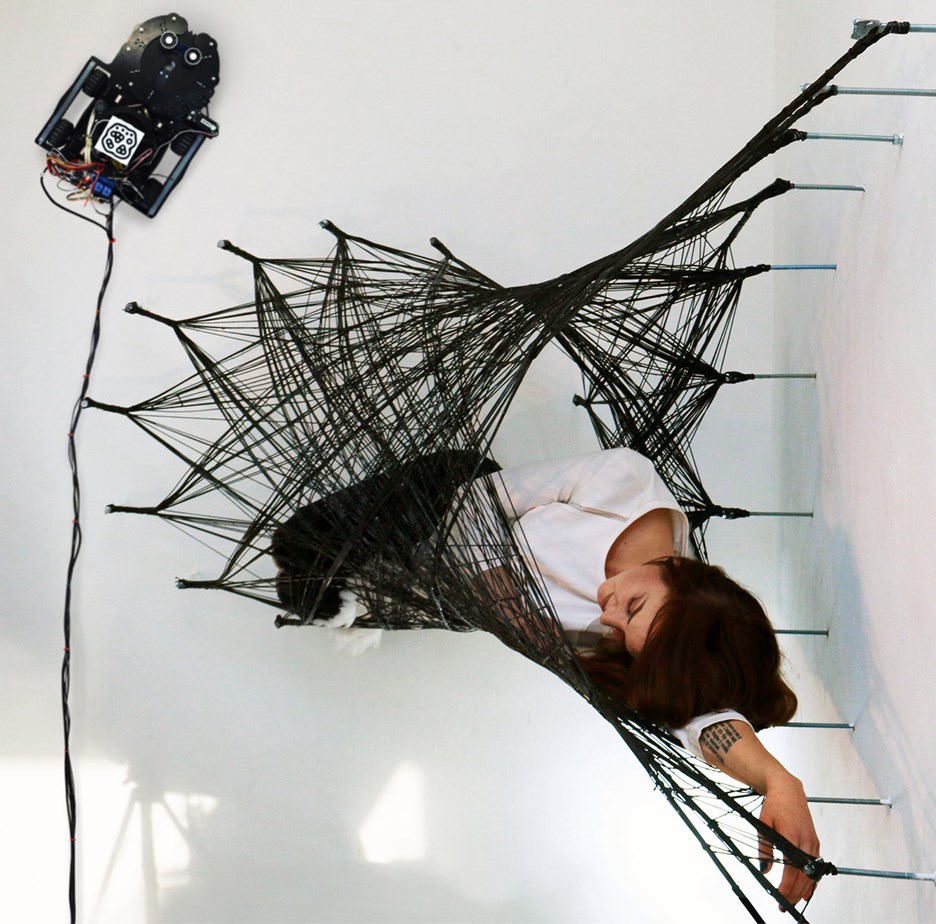
Picture this: you step into your home, only to find a mesmerizing structure that seems to have sprouted from another dimension, fashioned by nimble little robot spiders that have transformed your space while you were away. Welcome to the fascinating world of the Mobile Robotic Fabrication System for Filament Structures, a groundbreaking initiative from the University of Stuttgart’s Institute for Computational Design. This mesmerizing technology is not just about futuristic aesthetics; it’s about pushing the limits of architecture and construction through the use of collaborative robotic synergies. Let’s dive deeper into this revolutionary method of creation!
The Concept of Swarm Construction
The brains behind this innovative idea revolves around “swarm construction.” Imagine an army of small, agile robots akin to the Roomba, but rather than vacuuming your floors, they weave intricate structures that wouldn’t be physically possible using traditional building techniques. These wall-hugging bots effortlessly scuttle across surfaces, sewing together strands of carbon fiber into complex, geometrical forms that look as though they’ve leapt straight from a Spirograph. Inspired by the cleverness of nature, these robots emulate techniques from silk-weaving creatures like spiders, creating hybrid forms of architecture.
Architectural Potential: A New Frontier
At the helm of this fascinating project is Achim Menges, the director of ICD, who emphasizes the untapped potential of this technology in redefining architectural paradigms. The flexibility of the robots potentially allows for “impossible” structures—an exciting venture that could alter how we think about building and design. With each new piece crafted by the bots, we move closer to exploring architectural forms that traditional methods may struggle to achieve.
Integration with Surroundings
One of the most remarkable features of these spiderbots is their ability to not just weave along walls but to soon plot pathways on ceilings and curved surfaces as well. This maneuverability promises fantastic opportunities for imaginative designs and functional elements that merge seamlessly with their environment. Menges and his team are enthusiastic about increasing the number of robots involved, pushing towards even grander creations that delight in their defiance of conventional architecture.
Nature-Inspired Design
The inspirations for these creations extend beyond mere robotics; they also reflect nature’s own ingenuity. Menges’ enthusiasm for natural patterns has led his team to explore designs based on the forms and structures found in insect and lobster shells. The links to biological functions and aesthetics speak to a future where design and the natural world coexist symbiotically. Such blending of ideas not only highlights the capabilities of technology but also the beauty found in nature’s designs.
The Viewer Experience
From the audience’s perspective, watching these spiderbots is nothing short of magical. The elegance of their movements—passing spools of carbon fiber thread in a choreographed dance reminiscent of a classic cat’s cradle—creates a spectacle that enlivens the space. Even if the eventual structures might seem outlandishly abstract, the potential for custom designs offers exciting prospects for both residential and commercial environments.
Future Vision and Challenges
While the direction of this innovative technology is undeniably exciting, questions about practicality remain. Would we truly enjoy living or working in dynamic spaces made of carbon fiber? The answer lies in further research and exploration. As these robotic systems evolve, we can only await the mesmerizing creations they will manifest, potentially transforming how we occupy space altogether.
Conclusion: Toward a Robotic Architectural Revolution
The weaving capabilities of wall-walking spiderbots represent a convergence of technology, biology, and innovative design that challenges conventional architectural methods. As we step further into an age where robotics and construction intertwine, exciting possibilities beckon us forward. We stand on the brink of monumental change in how we envision our living and working environments, driven by the tireless collaboration of machines capable of achieving tasks beyond human capability.
At fxis.ai, we believe that such advancements are crucial for the future of AI, as they enable more comprehensive and effective solutions. Our team is continually exploring new methodologies to push the envelope in artificial intelligence, ensuring that our clients benefit from the latest technological innovations. For more insights, updates, or to collaborate on AI development projects, stay connected with fxis.ai.