
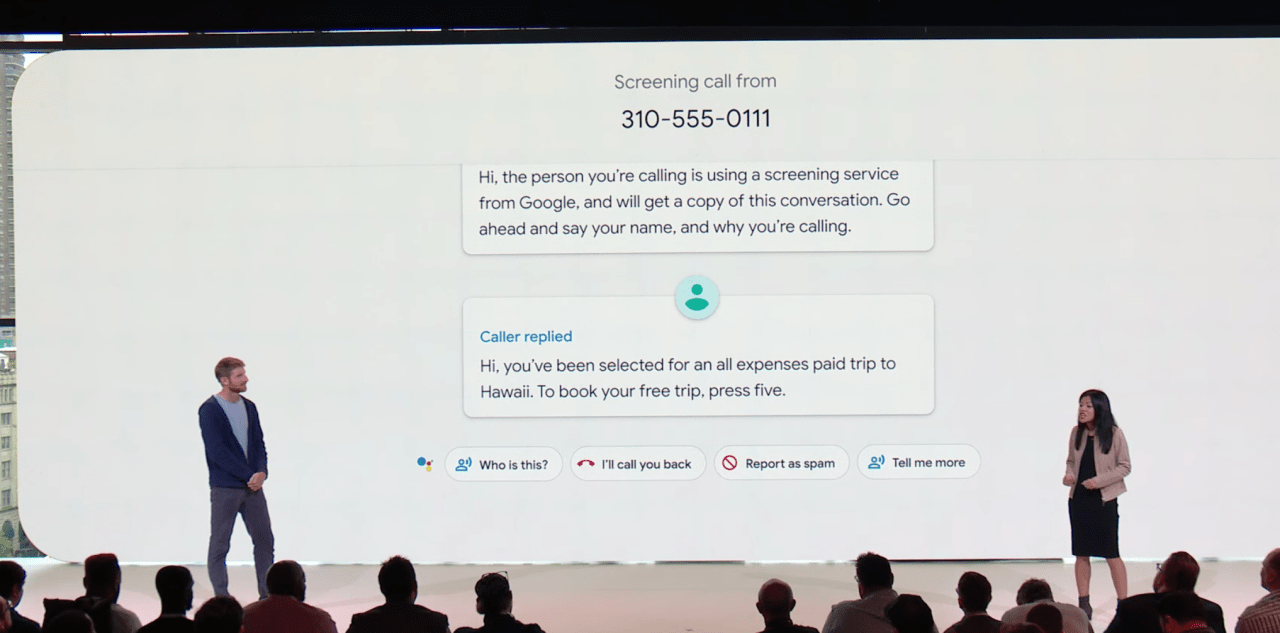
In an era where smartphones are integral to our daily lives, the unwanted intrusion of spam calls has become a persistent irritant for many users. Google has made significant strides in addressing this issue with its revolutionary Call Screen feature, introduced with the Pixel 3. This impressive advancement underscores a growing trend in mobile technology—the integration of artificial intelligence (AI) to solve real-world problems such as spam calls. As Apple continues its pursuit of innovation, it is clear that it needs to catch up in this arena, lest it lag behind its competitors.
The Rise of Spam Calls
Spam callers are increasingly sophisticated. The necessity of an effective solution is underscored by alarming statistics; research indicated that nearly half of U.S. cellphone calls in 2019 would be spam. Scammers employ various tactics, from impersonating government agencies to using local number spoofing, making it easier for these calls to bypass our defenses. Despite services like the National Do-Not-Call registry, the problem persists largely unresolved.
Google’s Innovative Solution: Call Screening
Google has taken an unusual approach to combat spam calls by leveraging AI capabilities in its Call Screen feature. The integration with Google Assistant allows incoming calls to be screened before you pick up. When activated, the Assistant can greet the caller and ask them to identify themselves, providing a real-time transcription of the conversation. This instantaneous information allows the recipient to make a quick decision on whether to engage or ignore the call, significantly reducing interruptions from unsolicited callers.
- User-Friendly Experience: With a simple tap of a button, users can activate the screening service. This instinctive function eliminates the need for complicated methods of managing spam calls.
- Future Database Development: Over time, as the system learns from spam interactions, Google could potentially create a comprehensive database that autonomically blocks notorious spammers in the future.
- Intelligent Interaction: The Assistant can use various responses to interact with callers, such as requesting more information or providing a polite rejection if necessary.
The Battle of A.I.: How Apple Can Compete
While Apple has made initial attempts to infuse AI capabilities into its devices—from Siri Shortcuts to automating workflows—the reality is that these features still require significant user engagement. The Apple ecosystem often necessitates manual adjustments, which can deter the average user. In contrast, Google’s Call Screen promotes a smoother, more autonomous user experience that requires no complex setup.
Apple needs to consider how it can innovate similarly. For instance, the introduction of a call-screening feature akin to Google’s would not only enhance the user experience but also significantly bolster its reputation for user-centric design. The seamless integration of such features would ultimately foster a more reliable and less intrusive communication environment for users.
Conclusion: An Urgent Call to Action
As the battle for smartphone supremacy pivots toward AI-driven solutions, companies like Google are leading the charge in creating technology that solves pressing issues like spam calls. For Apple, remaining stagnant isn’t an option. The implementation of a sophisticated call-screening feature is essential to stay competitive in the ever-evolving smartphone landscape. Failure to quickly respond to these innovations could risk losing loyal customers to competitors that prioritize practical, user-friendly enhancements.
At fxis.ai, we believe that such advancements are crucial for the future of AI, as they enable more comprehensive and effective solutions. Our team is continually exploring new methodologies to push the envelope in artificial intelligence, ensuring that our clients benefit from the latest technological innovations. For more insights, updates, or to collaborate on AI development projects, stay connected with fxis.ai.