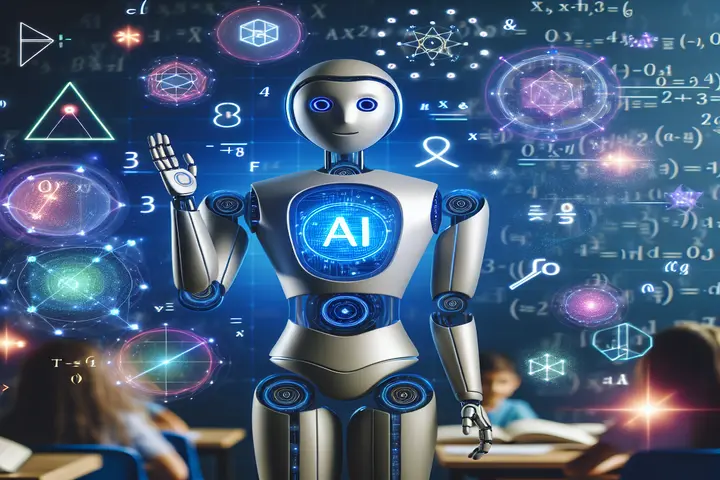
In a world that’s constantly changing, it’s pretty exciting to find tools that can help make tough subjects like math feel a bit easier. Let me introduce you to Qwen2.5-Math-RM-72B—think of it as a friendly companion ready to assist you on your math journey. This isn’t just another program crunching numbers; it’s like having a buddy who’s there to help you tackle problems in a way that feels approachable. Let’s dive into what makes this model unique, its strengths, and some challenges it might bring along.
What Makes Qwen2.5-Math-RM-72B Stand Out?
One of the first things that struck me about this model is its ability to communicate in both Chinese and English. As someone who has navigated learning in different languages, I genuinely appreciate how this feature can be a game-changer for many learners. However, I get that not everyone feels equally comfortable in both languages. For some, this bilingual capability can feel like a gift, while others might find it a bit overwhelming.
When I first started exploring the model, I was intrigued by its two reasoning strategies: Chain-of-Thought reasoning and Tool-integrated Reasoning. It’s like having different approaches to solve a puzzle, but I can see how it might confuse some users about which path to take. Math can be tricky enough without adding more layers to it!
How Qwen2.5-Math-RM-72B Learns
Imagine this model as a student, growing and learning through practice and feedback. It reminds me of my own school days, where I felt a rush of satisfaction when I solved a problem correctly, but also had to adapt when I stumbled. While this growth process sounds promising, it does raise some questions about reliability. I’ve noticed that the model can struggle with more complex problems, which can be frustrating when you’re looking for clear guidance.
The Model’s Smart Thinking
One of the standout features of this model is its ability to weigh different possible answers and pick the best one. It’s like watching a friend carefully consider their options before making a decision. I’ve seen it perform well on various benchmarks, even outshining some larger models. But just like us, its performance can vary depending on the task. There may be times when it doesn’t quite hit the mark, reminding us of the necessity for human oversight, especially in important situations.
Putting Qwen2.5-Math-RM-72B to the Test
Let’s take a moment to see how this model can be used in a real-world scenario. I remember a time when I was trying to explain a math problem to a friend, and we would break it down step by step. Here’s a simple code snippet that shows how you might prompt the model to tackle a math problem in a similar way:
import torch from transformers import AutoModel, AutoTokenizer model_name = "Qwen/Qwen2.5-Math-RM-72B" device = "auto" model = AutoModel.from_pretrained( model_name, device_map=device, torch_dtype=torch.bfloat16, trust_remote_code=True, ).eval() tokenizer = AutoTokenizer.from_pretrained(model_name, trust_remote_code=True) chat = [ {"role": "system", "content": "Please reason step by step, and put your final answer within boxed."}, {"role": "user", "content": "Janet’s ducks lay 16 eggs per day. She eats three for breakfast every morning and bakes muffins for her friends every day with four. She sells the remainder at the farmers market daily for $2 per fresh duck egg. How much in dollars does she make every day at the farmers market?"}, ] conversation_str = tokenizer.apply_chat_template(chat, tokenize=False, add_generation_prompt=False) input_ids = tokenizer.encode(conversation_str, return_tensors="pt", add_special_tokens=False).to(model.device) outputs = model(input_ids=input_ids) print(outputs[0])
In this example, we’re prompting the model to tackle a math problem step by step. It’s not just about crunching numbers; it’s about fostering a structured approach to problem-solving. I’ve noticed that while the model can guide us, it doesn’t always get it right, especially with more complex scenarios. This underscores the importance of critical thinking and verification in any learning experience.
Real-World Applications
The potential applications for Qwen2.5-Math-RM-72B are exciting and reach far beyond the classroom. Just think about its relevance in areas like education and data analysis, where solid mathematical reasoning is crucial. But as we consider incorporating such models into our daily lives, we need to proceed with caution. This technology is still evolving, and while it offers exciting possibilities, we must be mindful of its limitations and the potential for errors.
A Balanced Perspective
While Qwen2.5-Math-RM-72B showcases impressive capabilities, it’s essential to maintain a balanced mindset. Advanced technologies like this can enrich our learning experiences, but they also come with challenges. As we embrace these innovations, let’s stay aware of their shortcomings and the necessity for human oversight, especially in critical applications.
Wrapping Up
In conclusion, Qwen2.5-Math-RM-72B provides a fresh take on mathematical reasoning. Its bilingual capabilities, unique learning methods, and intelligent inference techniques lay a promising foundation for enhancing our learning and problem-solving skills. As we explore the potential of such technologies, I find it exciting to imagine how they might seamlessly fit into our educational environments and daily lives.
If you’re curious and want to dive deeper, I encourage you to check out the [Technical Report](https://arxiv.org/abs/2409.12122) and visit the [GitHub repository](https://github.com/QwenLM/Qwen2.5-Math) for additional resources. Let’s embark on this journey of discovery together, keeping an open mind about the possibilities and challenges that lie ahead.